Sunday, October 31, 2010

Tip 3: Use Direct Dialogue

If words are exchanged, if somebody thinks (probably you, since you're the subject of the essay) don't just report it: show it using direct dialogue.

Direct speech with quotations and such make a piece come alive.  Using exact words said in the voice and vocabulary of the characters adds personality and flavor.  If part of your story has characters who speak another language than English--use it.

In one story about growing up in Paramount a Chinese-American student quoted the Spanish that was used to make him feel like he was an outsider: "Tu eres una idiota. Pobrecito.  Revuelve a China!"  You don't need to have a degree in Spanish to understand: you know it means "We don't like you.  Get out!"  As well a recent essay I edited centered on an eccentric French speaking man.  Instead of  greeting with "Hello!" he says "C'est quai le capital de Nebraska?"  I know very little French, but we know what he means.  And it's more invigorating when we can hear his French ask trivia questions about middle America.  We get he's a little different than your average bear--and you don't have to waste any telling words explaining things (boring!)

You should also use the same techniques when describing thoughts.  Be direct; say it straight.  It's always more compelling and you want your essay to be a breath of fresh air, a relief from the stacks of dull and dry.

Sunday, October 24, 2010

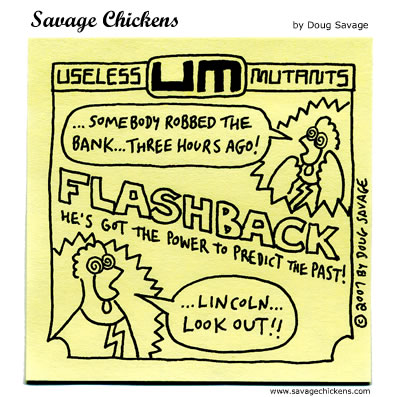
Tip 2: Dealing with the opening -- style and flashback

So last time we looked at finding the action.  It's so important to start with something that catches your reader's attention.  It's generally called an "arresting image." You want to arrest the reader's attention and hold it captive.

If you can combine your arresting image with similarly compelling language you have a winning opening.  A stylistic technique I am very fond of is the short, clipped sentence.  Here are some examples: "It started to hurt.  It started to really hurt."  Or "I am Batman."  Or "I am lost.  Utterly, irrevocably lost." These are short, intense, and lead the reader to immediately wonder where this is going without taking more than a second. These are two huge factors--interest and movement.  You never want your story to hit the doldrums.  The style of your sentences can make this happen even if not much actual action is happening.

Remember the material you cut in the previous post--the stuff that's just introductory? What do you do with you it?  Use a Flashback.  Flashbacks can be clumsy and distracting or they can be masterful, offering us just enough information to give us context and help us understand the bigger picture that your essay is going to communicate--the bigger picture being "the real you!"

Return to that boring introduction now.  Look for essential details.  Look for key background information.  Underline, highlight, circle them. And I mean KEY and ESSENTIAL.  Setting is usually important (time and place).  Some details that serve a clear purpose such as revealing personality quirks or feelings can be helpful, too.  But let's keep them to a minimum.  Once the initial action has started to trail off (you'd call this the falling action in your freshman English course), now is the time to throw in a short flashback that offers context.  But if you take too long, your amazing arresting image will come to naught.  So don't dally and move on to the next portion of your essay.

Now that you have your audience's attention, you don't want to lose it by going off track.  Stick to your story, move it along quickly.  And make sure you Show Don't Tell!

Thursday, October 21, 2010

Tip 1 -- The Narrative: Get into the Action

In Medias Res
It's Latin for "in the middle of things." Today we might say, thinking of action movies, "Cut to the chase!"  It's the most effective way to snag your reader's attention.  And that is what we all want, right?

I've been reading essay after essay this Fall and this is something I continuously advise.  It seems like such a big mystery, but it's not.  It's actually surprisingly simple.  I'll show briefly how it's done.

First, Find the Action
I'm assuming you have a draft written.  Take a look at it.  9 times out of 10 it's going to have lots of introductory material--just like your teachers require for essays in your English classes.  This is exactly how to bore your reader ! We need to capture our reader's attention.

Eventually you get to a point where the explanation stops and something happens. Say you go some where, meet some one, the first day, etc. This is where you should really start your essay.  Get out that wicked red pen and cross out everything that comes before (but don't get rid of your intro completely, we'll make use of some of it).  Everything that explains things. Everything that tells (TELLS!) the reader what you think, who you are,,etc.  That's the stuff we need to eliminate. Now we can start where the action is.

What Qualifies as action?
To be bluntly obvious: It's where something actually happens.  It's not making the plan for the trip; it's knocking on the strange door of your host family.  It's not being picked to open a a new store in a faraway city; it's showing up to an empty building early in the morning and having to work with strangers to get that store operational on time--usually too little time.

I read an essay last night that was about working in a research lab over the summer where rats and mice were used to experiment with different drugs that would, with luck, save human lives.  The first part of the essay was your standard boilerplate intro about getting the internship (what an opportunity!) and a little on possible ethical dilemmas in using lab animals.  I'm more than half a page down when finally something horrible and gory happens: a rat's spine is crushed.  It's horrific.  It made me cringe.  Guess where the essay should start?  Right there!  Vertebrae by vertebrae--gut wrenching and memorable.  If the writer started there I'd be completely engaged from moment one.


But, My Action is All Internal
You don't have something gut wrenching and gory? What about something someone says to you? What if all the action is internal, in your mind? Then I would look for the climactic moment when the change/thought occurs and start right before that. Don't worry about your audience “Not Getting It.” We can fill them in once we've got their attention! It's no use explaining anything if no one is listening.


If there is absolutely no action anywhere, you're not writing a narrative. Or you're just completely avoiding the topic: yourself. Oh, you're too boring to have a story? There are ways around that. There are techniques that can make nothing entertaining. (If you have any doubt, watch an episode of “Seinfeld” and see how they can make nothing—the topic of every episode—hilarious.)

So get back to your essays and start searching for the moment when something happens.  Make that your opening!

And don't forget to keep your old draft with all of that introduction stuff you crossed off. In my next note I will discuss what to do with that introductory material.